Step 6: The Phase Nobody Plans For

📍 Part 6 of 8 · Becoming Agent-Native
An 8-part series on going from delivery team to agent-native organization — lessons earned, not borrowed.
Genesis · Anxiety · Names Matter · Proof of Value · The Pivot · → Co-Creation · The Garage · The Flywheel


When we started, the model was simple.

Squad builds. Delivery uses.

That division felt right. Clean organizational lines. Clear ownership. A good model.

By Phase 5, it was gone, and it was the best thing that could have happened.


Delivery became builders.

Not because we told them to. Not as a program or initiative.

Organically…as the natural result of everything that came before.

People moved through the anxiety, saw agents make their days better, made the mindset shift from threat to tool to teammate. They started showing up with more than feedback. They showed up with half-built ideas. With sketches of agents they needed. With “I figured out how to make this work”

And with a low-code toolkit they built them. Themselves.


Why this works better than centralized roadmaps.

The people doing the work every day know the friction better than anyone. They know which task is genuinely painful versus just annoying. They know which data lives in the wrong place. They know what “good output” actually looks like for their specific context. They aren’t looking at a PowerPoint slide or a Figma, they are living the experience.

When they build the agent, it fits because it was designed by someone in the workflow it’s automating.

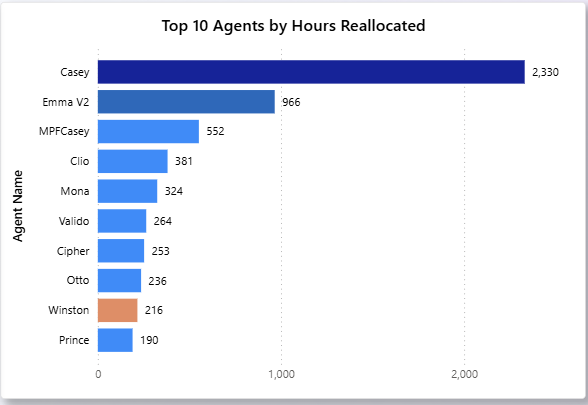
Mona is a great example. She didn’t come from a squad roadmap, she came from a delivery team member who was tired of the back and forth with humans scheduling meetings. She understood the problem completely. She had opinions about exactly what the output should look like. She came to demo days and the engineers said “that’s a great idea but it won’t work” and then she showed them the MVP…working. That day changed our world.

That’s the model. You can’t push it from the top down. It has to grow


The propagation effect.

When everyone in delivery is creating, velocity compounds. One agent spawns an idea for three more. A tool that worked for one person gets adapted for the whole team. The surface area of “problems we’ve automated” expands faster than any squad sitting in an ivory tower could imagine.

There’s not some special team that’s the only one creating. Everyone is. That’s the whole point.


The catch.

There is one. And it’s significant enough to become its own post.

When everyone is building, you get overlap. You get orphaned agents when the person who built them goes on vacation and something breaks. You get agents that don’t log to the dashboard, don’t meet governance requirements, don’t fit the responsible AI framework.

We hit all of this. And more.

Seven agents doing roughly the same thing. Nobody quite sure who owned what. A model update quietly breaking something nobody was watching.

Citizen development at scale without operational infrastructure eventually leads to chaos.

Which is exactly what led us to build the Garage.

Creativity without ops is a mess waiting to happen. Ops without creativity is a very well-governed nothing. You need both.

Next: The mess — and what we built to fix it.

Step 5: The Day Anxiety Became Curiosity

📍 Part 5 of 8 · Becoming Agent-Native
An 8-part series on going from delivery team to agent-native organization — lessons earned, not borrowed.
Genesis · Anxiety · Names Matter · Proof of Value · → The Pivot · Co-Creation · The Garage · The Flywheel


There isn’t a single moment. It’s more like a temperature change.

Gradual. And then all at once. Exactly like Hemingway described bankruptcy.

The signal: someone stops asking “is this going to replace me?” and starts asking “what else could they do for me?”

That question – unsolicited, forward-looking, a little excited – is the pivot. And everything after it is different.


What caused it.

Not a single thing. An accumulation.

The email draft that was perfect. The research that came back before they’d finished their coffee. The weekly summary that was just there without anyone asking for it.

When those moments pile up, the mental model flips. The agent stops being a threat and starts being an asset.

And once it’s an asset, a very natural question follows: how do I get a better one?

That question is the whole game. Because it means your delivery team has become an active participant in the quality of their own AI teammates. They want them to improve. They have opinions about how. They’re invested.


The frame that accelerated it.

Our team always has more work than capacity. There are always more customers to serve, more research to run, more value we haven’t gotten to yet.

We are not, and have never been, trying to reduce headcount.

What we’re trying to do is amplify the headcount we have. Get more high-value work. Free people from the repetitive work that agents handle better anyway. Work on the hard stuff. Grow your career.

It’s like the tractor replacing the hand plow. You didn’t lose the farm. The farm got bigger.

When people understood that frame, agents as multipliers, the math became obvious. More impact, same team, better work.

That’s not a threat. That’s a competitive advantage for every person on the team.


What the pivot looked like in practice.

Feedback volume jumped. People who had never commented on an agent suddenly had opinions. Feature requests started flowing. Someone said “could Reese do this if we gave him this additional context?” and “I think George would be even better if he also pulled from this system.”

That’s not tool usage. That’s coaching. And you can’t coach something you’re afraid of.

When you see this shift starting, lean in fast. Turn that spark into a fire. Prioritize the feature requests that come from delivery. Make it visible that their input is landing in the roadmap. Create the fastest possible feedback loop.

The pivot is fragile at first. Feed it.

The moment your team starts coaching their agents instead of tolerating them, the phase change is real.

*Next: What happens when delivery stops requesting agents and starts building them.

Step 4: The Agent Dashboard

📍 Part 4 of 8 · Becoming Agent-Native

An 8-part series on going from delivery team to agent-native organization – lessons earned, not borrowed.
Genesis · Anxiety · Names Matter · → Proof of Value · The Pivot · Co-Creation · The Garage · The Flywheel

Early in Phase 2, before we knew if people would even use these agents, we built a usage dashboard and a small component that every agent had to include – Power Automate, Copilot Studio, M365 Copilot – it was table stakes to onboard.

It felt a bit like overhead at the time.

It became the foundation of everything.

What the dashboard tracked: which agents were being used, how often, by whom, and with what outcome.

Simple. But surprisingly revealing.

Some agents were hits. Usage climbed. Feedback was positive. The team became genuinely dependent on them. These got investment: more features, deeper integration, wider rollout.

Some were mediocre. Usage below expectation but not zero. The dashboard made us ask the right question: is the agent underperforming, or is there an onboarding gap? Is there a better design? Those are different problems. You can’t diagnose without the data.

Some just didn’t work out. And the dashboard gave us permission to retire them. No politics, no ego, just “the numbers say this isn’t earning its place.”


The data showed us insight about people, not just agents.

We saw a clear split emerge: pro users and skeptics.

Some team members were all in. They used agents daily, sending feedback all the time, acting like internal product managers for the agents they’d adopted. Others were lukewarm.

That visibility mattered. It let us find the right internal champions. It let us understand the gap between those two groups. It let us have a business conversation, with real numbers, about what was working.

ROI reporting doesn’t only justify the investment. It shows your team you’re taking this seriously. And them.


But the most important proof never showed up in the dashboard.

It was the moments.

The team member who realized they hadn’t manually changed that case status in weeks. Not because they forgot, but because Theo handled it.

The person who got their Friday afternoon back because George was doing the weekly summary.

The quiet relief of: oh, that’s just handled now.

When those moments accumulate, something shifts. The agent stops being an experiment and starts being infrastructure. The dashboard tracks the what. The moments explain why it matters.


If I were advising someone starting this today, I’d say: Build the measurement layer early, at the business group level, not deep in IT.

Once you have 10 agents and a skeptic asking “what’s the ROI on all this?” you’ll be very glad you have an answer.

“Measure early. The dashboard will make decisions for you that would otherwise become arguments.”

Next: The inflection point, when the team stopped worrying about agents and started wanting more of them.

Part 3: Words Matter, This Is Not a Branding Exercise

📍 Part 3 of 8 · Becoming Agent-Native

An 8-part series on going from delivery team to agent-native organization – lessons earned, not borrowed.
Genesis · Anxiety · → Names Matter · Proof of Value · The Pivot · Co-Creation · The Garage · The Flywheel


I wrote about this in August Agents: Names Matter and it was the right instinct. Now, on the other side of the full journey, I understand why it worked even better than I thought at the time.


Reese. Casey. Nabha. Elliot. Gibbs. Mona. George. Winston. Axel. Lily.

These aren’t product names. They’re teammates.

That distinction (which can sound like fluff the first time you hear it) turned out to be one of the most operationally significant decisions we made.


Here’s the simple version of why it works.

When something is a tool, your relationship to it is passive. You use it or you don’t. You don’t give a shovel feedback. You don’t coach a dashboard. Tools sit in a drawer until someone reaches for them.

With a teammate, your relationship is active.

You onboard them. You give them context. You tell them when they’re missing the mark. You notice when they improve. You advocate for them when someone else doesn’t understand what they do.

When your team has a stake in an agent’s success, they do something invaluable: they give feedback. Quality feedback. The kind that makes agents genuinely better.

We did regular performance reviews with our agents. More frequent right after onboarding or a new capability release (just like a new hire or after a promotion), less frequent as they found their footing. Same discipline as the rest of the team.


George is the clearest example.

Before George, Friday afternoon meant pulling together the week’s work, surfacing the key insights, formatting it, and getting it to the right people. Valuable. Tedious. The first thing that got cut when Friday got busy.

George does it automatically. He looks across everything you have produced, finds the biggest insights, and delivers them without anyone asking.

But here’s what made George good: feedback. Lots of it. Specific feedback from people who saw George as a teammate they were invested in making better.

That feedback loop exists in part because of the naming. Because of the personification. Because of the decision to onboard rather than launch.


There’s a governance benefit too, which we didn’t anticipate.

Naming forces clarity. When Mona graduated from a personal helper to a team-level role, we treated it like a promotion. Clarified scope. Assigned an owner. Eliminated overlap with other agents who’d been doing adjacent things.

Without that discipline, you get what I’ll describe in Part 6: seven agents doing roughly the same thing, disjoint responsibility, things slowly breaking.

Personas force you to think like an org designer, not just a builder. And be very clear, you are building an org.


The question your team will stop asking once agents have names:

“Do we need this?”

The question they’ll start asking:

“How do we help them thrive?”

That’s a completely different organization.

Giving your agents personas isn’t just adoption strategy. It’s how you build a team that includes humans and agents and actually functions like one.

Next: How we knew any of this was working — and what happened when we looked at the data.

Part 2: The Thing Nobody Warns You About

Part 2 of 8 · Becoming Agent-Native

An 8-part series on going from delivery team to agent-native organization — lessons earned, not borrowed.
Genesis · → Anxiety · Names Matter · Proof of Value · The Pivot · Co-Creation · The Garage · The Flywheel


Most AI transformation stories skip Phase 2.

They go from “we built some agents” straight to “adoption soared and everyone loved it.”

That’s not what happened for us.

When we introduced the first agents to the delivery team, the reaction wasn’t excitement. It wasn’t curiosity.

It was anxiety. Real anxiety. The kind that doesn’t announce itself clearly. It comes out as skepticism, low usage, polite questions with an edge underneath them.

The edge was: is this going to replace me?

Nobody said it that way. But it was in the room.

There was a second layer too. A small squad had gone off and built things, and now those things were showing up in workflows that had been their workflows. It kind of felt like change being done to them.

“I feel like I’m on the outside looking in at my own job being replaced.”

That’s not a technology problem. That’s a trust problem. Technology solutions don’t fix trust problems.


We made two structural choices. Both matter.

The first choice: we doubled down on agents being teammates, not tools; we gave them all personas and personalities.

This sounds like semantics. It isn’t.

A tool is something you use, or don’t. It sits there. It doesn’t get better. It doesn’t respond to coaching. It doesn’t care if it’s valuable or not.

A teammate is different. A teammate can be given feedback that actually changes how they work. You can advocate for them. You can push for them to be more capable. You have a stake in whether they succeed.

When people have a stake in something, they engage with it differently.

The second choice: every agent got a name.

Reese. Casey. Theo. Mona. George.

Not product names. Not “AI Assistant v2.3.” Real names, each one tied to the function, each one introduced the way you’d introduce a new hire; with context, with expectations, with a clear path to give feedback.

More on this in the next post, but the short version: named agents get coached. Unnamed tools stay static and get ignored. When was the last time your garden rake got an upgrade?


The anxiety didn’t disappear overnight. But it had somewhere to go.

The question shifted from “is this replacing me?” to “how do I best work with this?”

That’s the crack in the door. That’s what Phase 3 is about.

You can build the best agent in the world. If your team doesn’t trust it, you’ve built nothing of value.

Next: Why naming your agents isn’t branding; it’s adoption strategy.