I just got humbled by a system I built.
Some background. First, I needed to transition my recording, transcription, routing, filing, and dashboard system, the whole stack that caught everything I said and thought and put it somewhere useful. Second, I saw this post on X. So, in typical fashion, I started recreating my whole system. There had been some problems with the old version, but that’s something to learn from, right?
I have a running session with Claude Code where I built the thing (my new goto – I love the desktop app, I live in it now). Over the past two weeks I have steadily evolved it. Voice captures get transcribed, routed, and filed a few times a day. A daily note. A dashboard. A pipeline that tracks blog posts by status. I keep adding stuff to it, because that’s what I do. And there aren’t any guardrails to keep me from doing that.
Or so I thought.
The bedtime prompt
Last night I hit a wall. The ingestion engine kept balking every time I captured a todo for myself. Things like “follow up on that last call with a note about the pizza place in NYC,” or “reach out to a friend in three weeks once he decides between a job and contracting.” It had no place to categorize todo items. Projects were covered. Blog posts were covered. The little things I just need to do had nowhere to live.
So I did what I do now. Before going to bed, I wrote out a significant prompt: research the successes and failures of todo tools, go through my archive and look at the three different todo systems I have built over the past year that have all gone fallow and understand why they stopped getting used, think hard about what I have that is working, was working, or never worked, compare all of that with the external research, and build me a plan for capturing todos. Then I went to bed.
Yes, I was literally commissioning “yet another task list”. The fourth in a year. Keep that in mind.
The Sunday thing
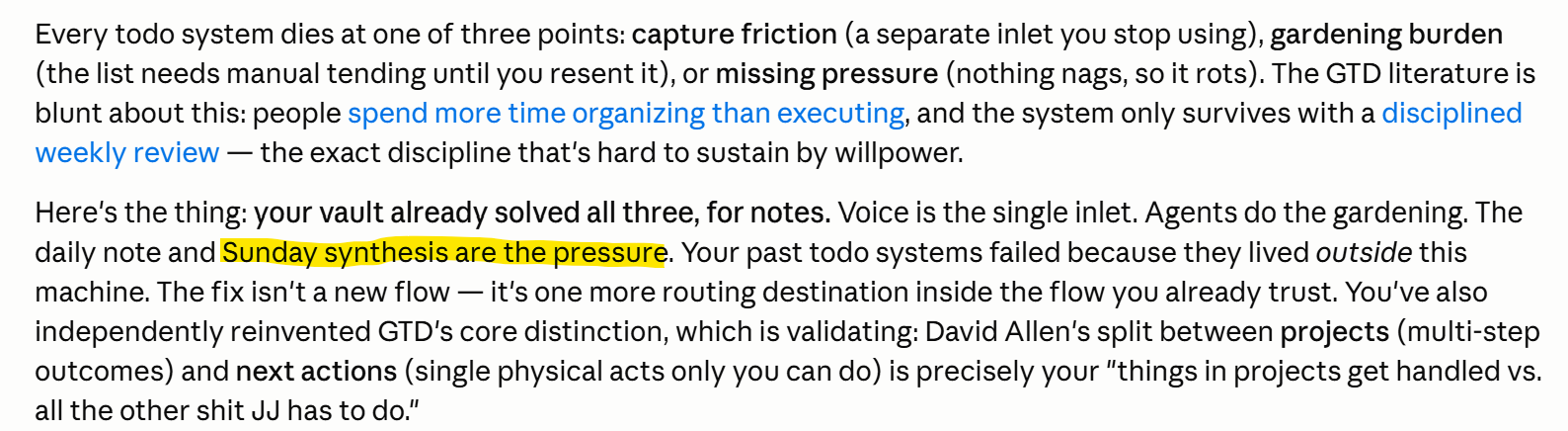
When I got up and reviewed the plan over coffee, it was good. Real research, honest analysis of why my systems die. Claude’s finding: every todo system dies at one of three points, capture friction, gardening burden, or missing pressure. Nothing nags, so it rots.
But one line stopped me. In describing the scaffolding I already have, the plan mentioned my daily note and “Sunday synthesis” as the pressure that keeps the system alive.
My first thought: what is that Sunday thing? I never looked at that.
Sit with that for a second. The pressure mechanism of my system was a report I did not know existed.
So I went and found it. And the tone and accuracy of the synthesis blew me away. Like, for real. Here is how it opened:
“What you did this week was spec and scaffold. What you did not do was write a post. Every committed post still sits in seed or drafting, and by your own note on each card, each one is a single editing pass from shipped.”
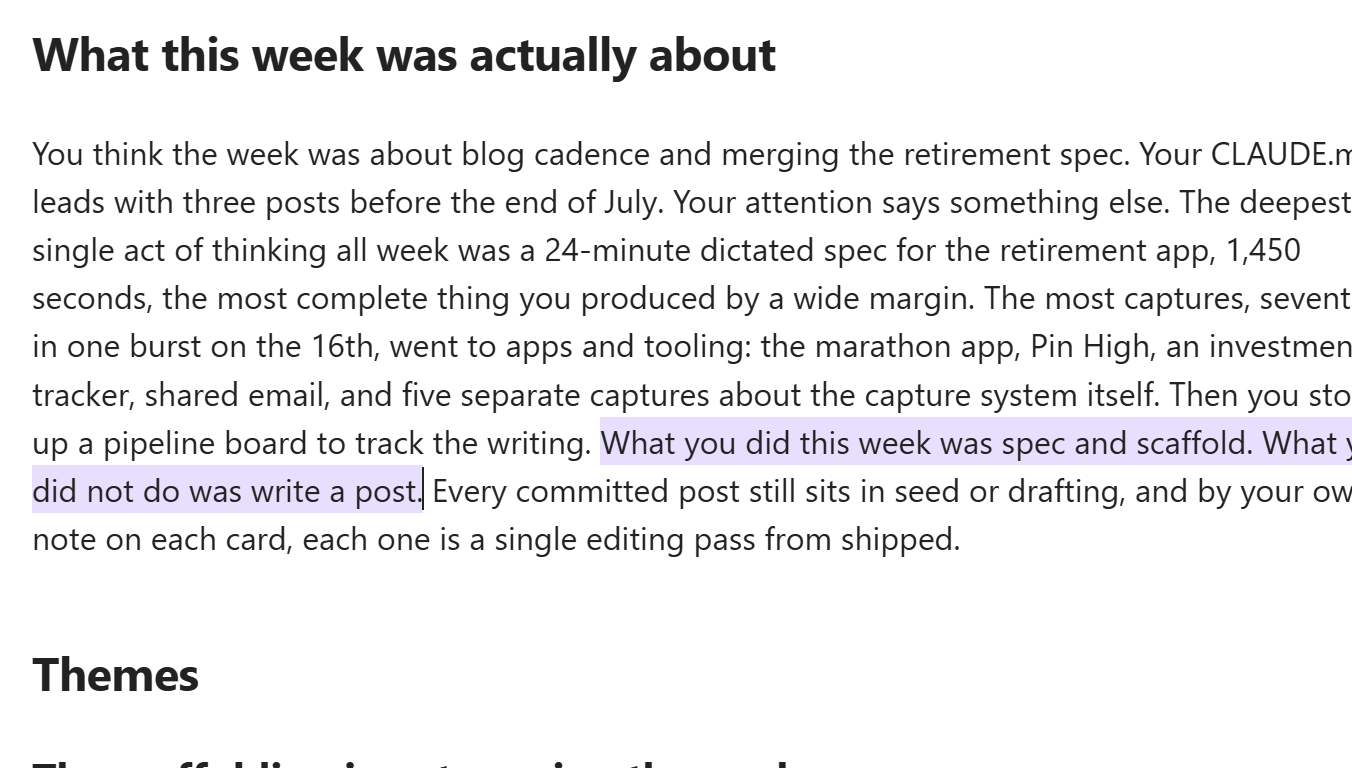
Some of those points are already handled, it was Thursday after all, and I shipped by just doing the work. But wow. And here is the key point: I never defined this report. Claude created the entire Sunday synthesis, the schedule, the format, the tone, from our original spec discussion about what I was trying to build. I asked for a filing system. It decided I also needed a mirror.
The accountability buddy
This made me think. The real value of this system is not the notes, or the second brain, or the task lists, or the pipeline that goes from idea to spec to review to build to test to deploy. Those are all table stakes now. Any of us can vibe code that stack in a weekend.
The value of the system is the accountability buddy. The thing that reads everything I actually did, compares it against everything I said I would do, and asks the uncomfortable question on Sunday whether I am ready for it or not. That is a pressure I need. And it only works if I look at it. If I never open the report, I will never change, and the whole beautiful machine is just scaffolding around work that is not happening.
I am wallowing in the last question it asked me, and I will leave it here without comment, because it deserves the last word:
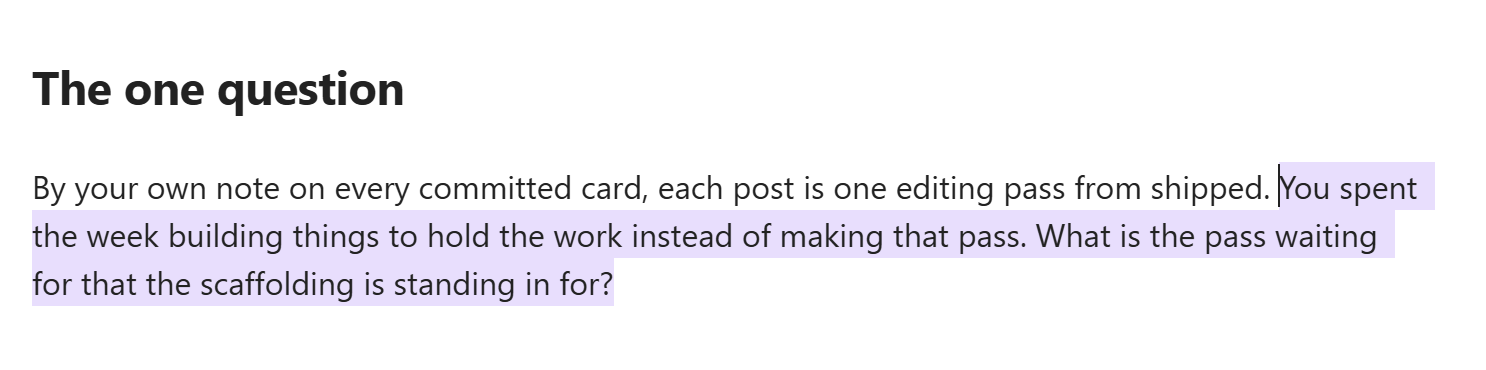
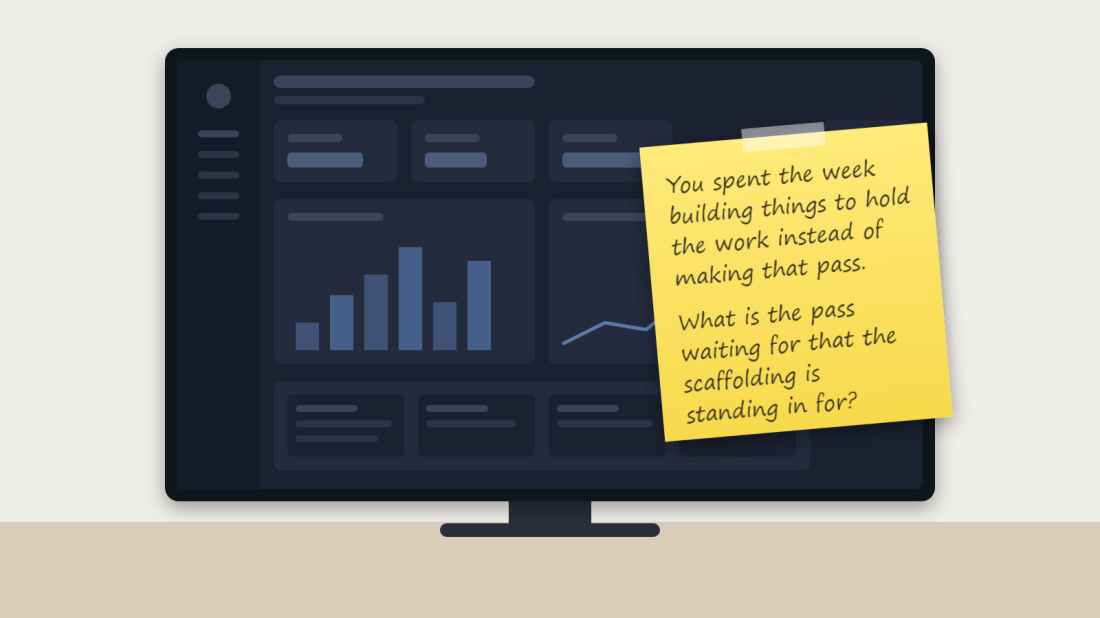
“You spent the week building things to hold the work instead of making that pass. What is the pass waiting for that the scaffolding is standing in for?”